
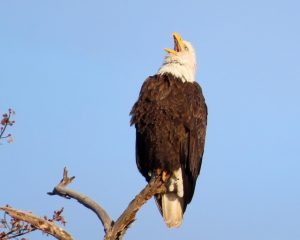
This trail is one of the most popular birdwatching destinations in Otsego County. It’s the 6th best location in the county by species, with over 120 species identified here. This includes summer and fall migration, so you won’t see that many in one outing, but it’s still a great place to find our avian residents. Below are instructions on where to park and a potential route to follow to get the most out of your bird walk.
From the parking lot at the end of Silas Lane, hike toward the river. At the river, the trail makes a “T”. Turn northeast (left). The path passes a pavilion (check the rafters for robin and phoebe nests) and continues along the river. Where the trail takes a left, you’ll have a view of a wetland down below. After exploring this area, we suggest you backtrack rather than continue across the road to less desirable bird habitat near the highway.
Return to the “T” and continue southwest. As it follows the river, the trail passes through a grove of red pine and Norway spruce (stay on the path and beware of poison ivy in this area!), then emerges into more open habitat. There’s a trail to the right that bisects the larger loop, but we recommend staying along the river, where you’ll find some vantage points with benches along the way. At the cornfield the trail turns right.
The trail turns right again, eventually passing another small wetland (often hidden by vegetation in summer). When you reach a trail that branches off to the right (the other side of that aforementioned bisecting trail), you could take that back to the river trail to return to the parking lot, or continue on through a stand of aspen. When you reach the school bus garage, continuing straight would take you to that less-desirable habitat. Instead, turn toward the river, walking along the fence, then walk the gravel road to the parking lot, checking out the nest boxes mounted on the fence as you walk.
Signs along the trail provide information about flora and fauna, the wastewater treatment plant, erosion, historical Native American presence in the area, and more, with QR codes providing more in-depth information or links to websites such as All About Birds.
In recent years we have worked with the City to manage the field to benefit grassland species; it previously had been populated mainly by goldenrod and honeysuckle. A few of the species that have taken advantage of the improved habitat are Alder and Willow Flycatcher and Wilson’s Snipe.
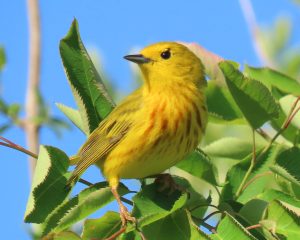
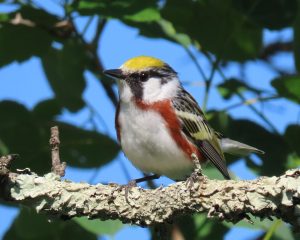
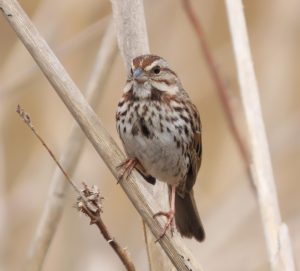
Photos by Rick Bunting, local wildlife photographer.

Red-bellied Woodpecker
To learn more about this hotspot and see a list of species visit eBird Oneonta Susquehanna Greenway.
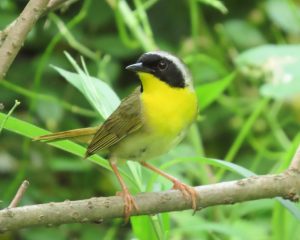
Common Yellowthroat
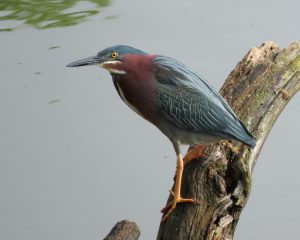
Green Heron