
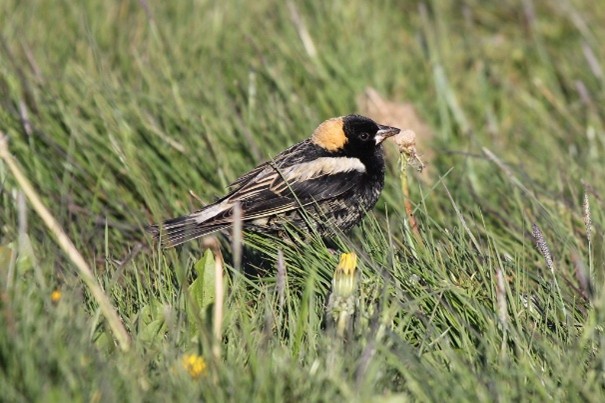
Grassland Bird Habitats
Grassland bird species populations have dropped precipitously in the northeastern U.S. and throughout the country, as our grasslands disappear due to changing human uses and natural succession, which allows grassy fields to become brushy as woody shrubs and perennial plants begin to grow, eventually being taken over by trees.
Many old fields provide good general songbird habitat, but grassland birds have more specific needs. Historically, many grasslands were maintained by natural processes (fire, grazing, beaver activity). Dairy cow pastures and active hayfields can provide the habitat needed, but the decline of small farms necessitates other measures to protect species such as Northern Harriers, Bobolinks, Eastern Meadowlarks, and Savannah Sparrows, which depend on grassland habitats for feeding, nesting, and breeding.
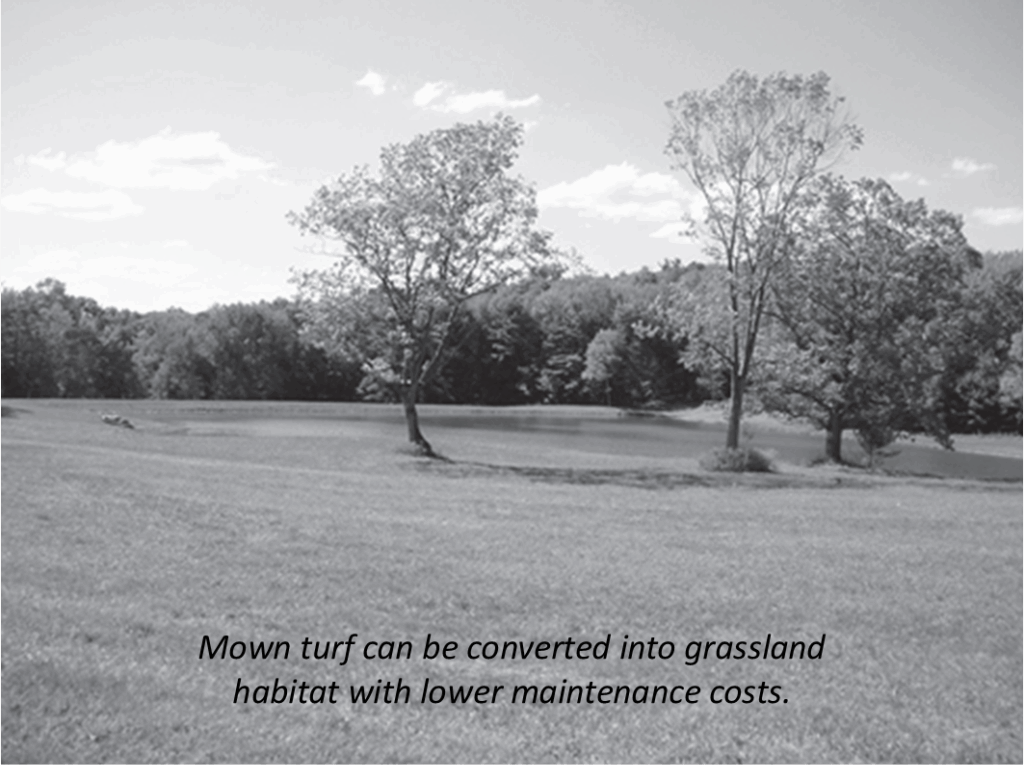
To create and maintain grasslands and encourage grassland birds:
- Choose to manage a field for grassland habitat; assess suitability of the site.
- Remove woody vegetation.
- Mow annually or every other year, ideally in mid-August.
- Refrain from intrusive activity during the breeding season.
- Monitor grassland bird activity.
- Reduce controllable predators (especially domestic cats).
- Erect nest boxes for cavity-nesting birds.